Well this summary is only about a year late. The struggle is real, y'all. ;o) This blog is summarizing this article: Sorensen-Unruh, C. (2024). The ungrading learning theory we have is not the ungrading learning theory we need. CBE—Life Sciences Education, 23(3), es6: 1-12. https://doi.org/10.1187/cbe.24-01-0031 This article is open access so go download it asap for more information … Continue reading A summary: The ungrading learning theory we have is not the ungrading learning theory we need
Tag: teaching
Equity-Minded Pedagogy vs. Emancipatory Pedagogy
There are many current descriptors that are floating around SOTL, DBER, and STEM educational research spaces, each trying to accurately capture some difference in pedagogies: culturally related/responsive/sustaining pedagogy, open pedagogy, critical pedagogy, decolonized/decolonizing pedagogies, equity-minded pedagogies, equity-centered pedagogies...and that's just mentioning a few. I tend to group the first three pedagogies - culturally related/responsive/sustaining, open, … Continue reading Equity-Minded Pedagogy vs. Emancipatory Pedagogy
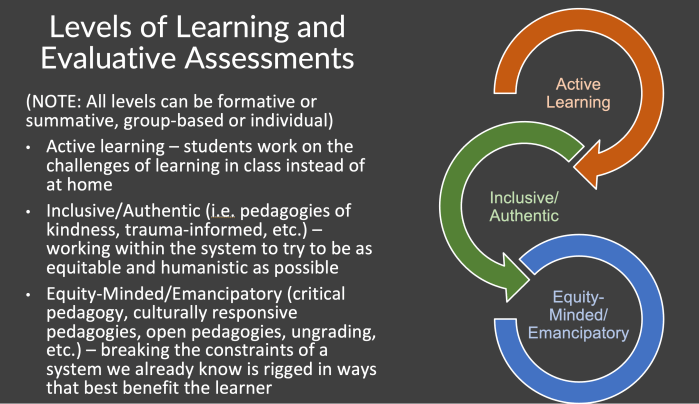
Belonging Part 4.0: Belonging and Emancipatory Pedagogies (Part 1)
Here's the part where we (I as the writer, you as the reader) try to integrate belonging and emancipatory pedagogies, like ungrading. Which I *think* is a bigger lift than I first thought it was. So, in the end, this is a two parter: this part talks about what emancipatory pedagogies are and the second … Continue reading Belonging Part 4.0: Belonging and Emancipatory Pedagogies (Part 1)
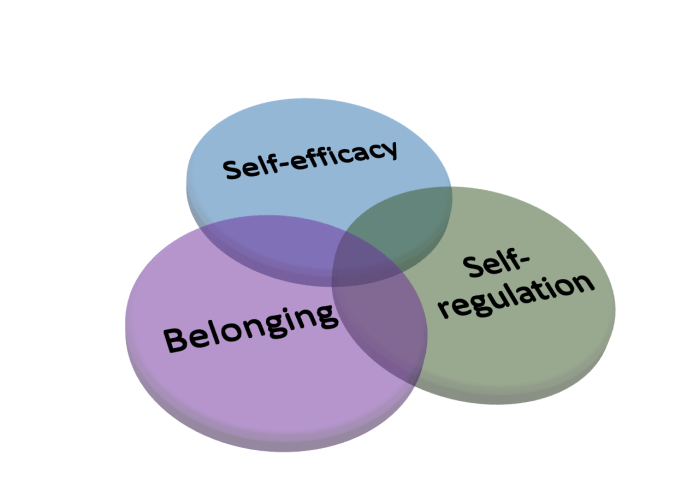
Belonging Part 1: What is it and Why should we care?
Here's part 1 of the series on belonging, which includes trying to define belonging and why it matters so much to us as humans. I didn't actually get to cognitive biases, but hey - what's another blog in the already 6-part series?!? Belonging – What at least some of the research says What we know: … Continue reading Belonging Part 1: What is it and Why should we care?